Mold inspection in Sarasota is free with us and includes moisture readings, humidity measurement, and photographs. Laboratory testing runs $300–$900 when warranted — and per EPA guidance, visible mold with a known water source generally doesn't need testing before remediation.
Here's what an inspection measures, and when a test is worth paying for.
What gets measured
- Moisture readings on wall bases, suspect surfaces, and materials near any water source — recorded by location, not summarized
- Indoor temperature and relative humidity, because in this market that pair is frequently the whole diagnosis
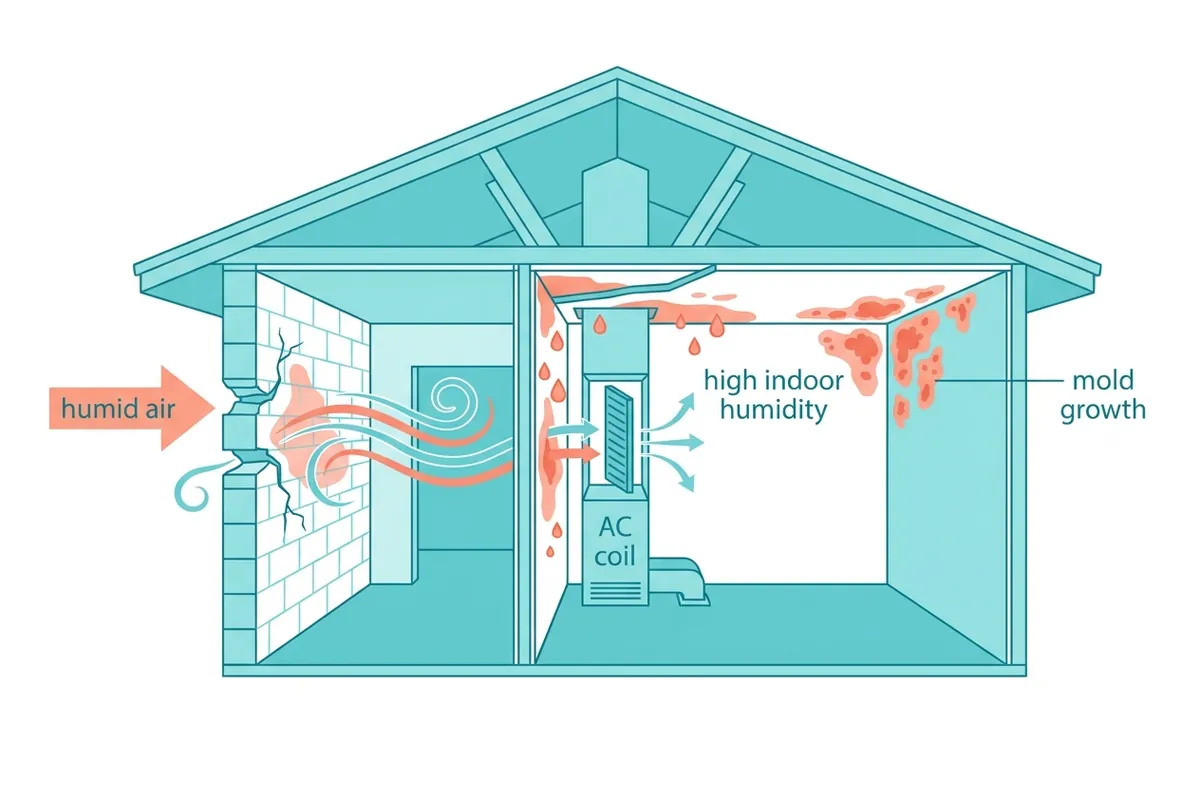
- The air handler, return, and accessible ductwork — the most common hidden source in Florida homes
- Attic sheathing and bath fan terminations — a fan venting into the attic is a mold machine
- Exterior intrusion points — window and door flashing, wall penetrations, storm damage
- Thermal imaging and a borescope where a cavity needs assessment without demolition
When testing is worth it — and when it isn't
The honest version, which costs us money to say: if you can see mold and you know where the water came from, a test usually doesn't change what happens next. The remediation is the same regardless of which genus a lab names. EPA guidance takes this position, and any company that insists on testing every visible patch is billing for reassurance.
Testing earns its price in four situations. When there's a musty smell with no visible source and the moisture readings can't localize it. When a health concern means someone wants documentation. When a real estate transaction or insurance claim requires a record. And as a post-remediation verification, confirming the job worked — which is the one case where testing is unambiguously worth it.
Florida separates the roles, and you should know why
Florida licenses mold assessors and mold remediators as distinct credentials through the Department of Business and Professional Regulation, and state law restricts the same party from performing both assessment and remediation on the same project.
The logic is worth understanding as a buyer: if the company writing the protocol is also the company paid to execute it, every additional square foot found is additional revenue. Separating the roles removes that. Practically, it means an independent assessment carries more weight than a remediator's own — and it means you should verify the license of whoever you hire, including us, on the DBPR site before signing anything.
What you get from us, free
A written report with moisture readings by location, humidity numbers, photographs, an identified moisture source, and a scope with fixed line prices for the work we'd recommend — including the outcome where the recommendation is a dehumidifier and a bath fan rather than remediation. That report is yours whether you hire us or take it somewhere else.
Which finding tells you what?
The most useful Sarasota inspection is the one booked in August on a house that has been closed since May — before the finding is a remediation quote.
| Situation | What it means | How it reads locally |
|---|---|---|
| Visible growth found | That alone justifies action — sampling becomes optional | Visible growth in a reopened seasonal home already answers the question — act |
| Moisture found, no growth yet | The cause caught early — fix water, skip demolition | High indoor readings with no growth yet is the seasonal-home jackpot: cheap to fix |
| Air counts elevated | A lead worth following, not a diagnosis on its own | Wet-season outdoor counts are enormous — indoor comparisons need that context |
| Nothing found, smell persists | Cavity or equipment inspection is the honest next step | Duct chases and AC closets are where a clean-looking house hides its answer |
For seasonal residents the calendar is the diagnostic tool: any inspection beats no inspection, but timing it to the wet season is what makes it cheap.
Inspection questions, straight answers
Do I actually need a mold test?
Often not. EPA guidance says that if you can see mold and know the water source, testing generally isn't necessary — the response is the same either way. Testing earns its cost when there's a musty smell with no visible source, when a health question needs documentation, or when a sale or insurance claim requires a paper record.
What does an inspection cost?
Our visual inspection with moisture readings is free. Laboratory testing, when it's genuinely warranted, typically runs $300 to $900 depending on sample count and whether air sampling is included. We tell you before anything is ordered whether testing will change the plan or just add a line item.
What's the difference between an assessor and a remediator in Florida?
They're separate state licenses with separate roles. A mold assessor investigates and writes a protocol; a mold remediator performs the cleanup. Florida law restricts the same party from doing both on the same project, which prevents the company sizing the job from being the company paid by its size.
Can you find mold inside a wall without opening it?
Often, yes. Moisture meters read through surfaces, thermal imaging shows temperature differences consistent with wet material, and a borescope inspects a cavity through a very small hole. Those narrow down where to open rather than eliminating opening entirely — but they turn exploratory demolition into a targeted cut.
What should a real inspection report include?
Moisture readings at specific named locations, indoor temperature and relative humidity, photographs, an identified water source, and a scope tied to what was found. A report that names a price without naming the moisture source isn't a diagnosis — it's a quote wearing one.
Get a free Sarasota mold inspection
Tell us what you’re seeing or smelling — a musty room, staining on a wall base, discoloration in the AC closet, humidity that never drops — and we’ll schedule an inspection with moisture readings and photos. We reply the same business day.