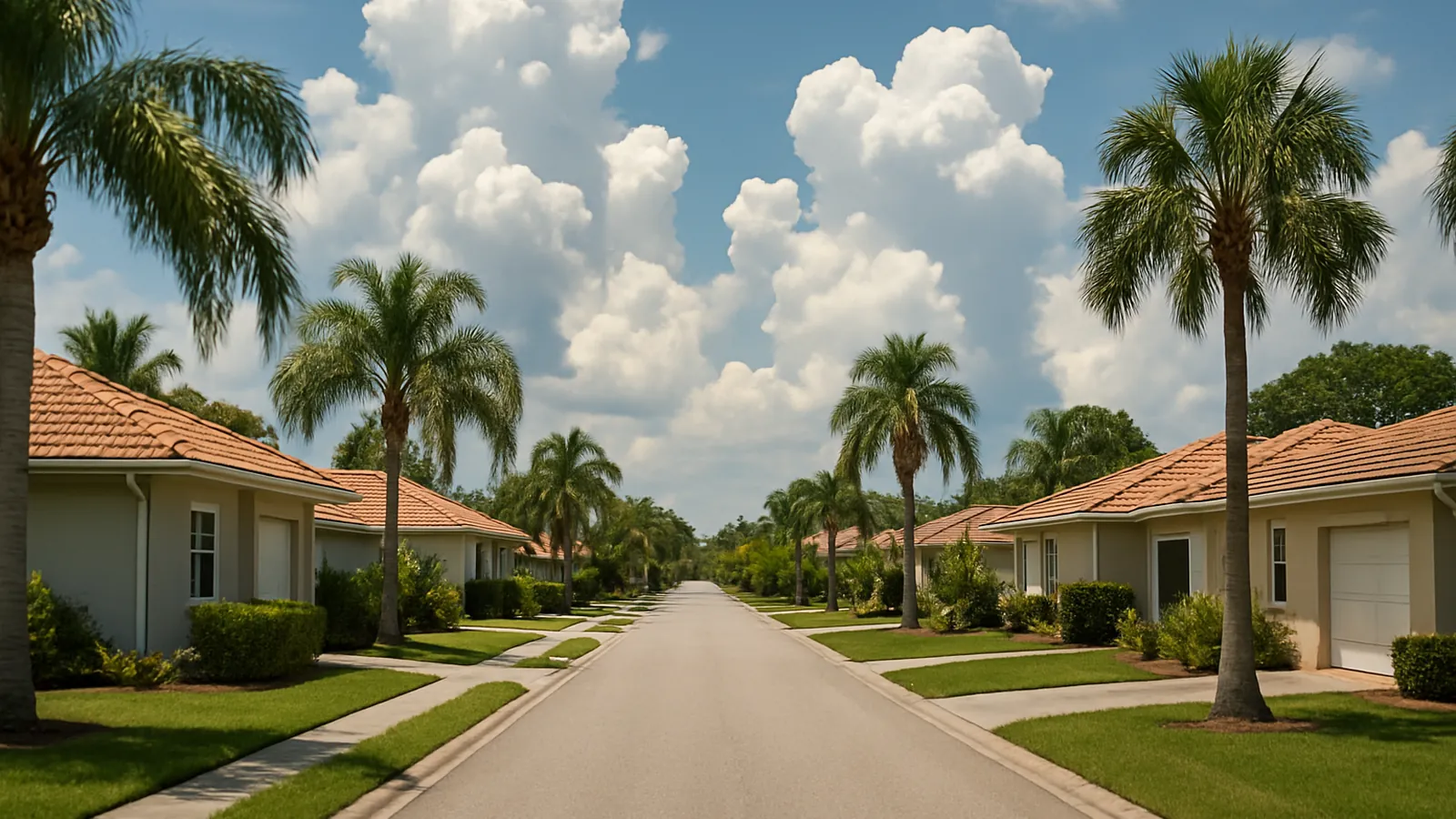
Mold removal in Sarasota costs $500–$6,000 for most residential remediation, set by how far it spread and whether materials must be removed. Roughly 54 inches of annual rain and a humid June-through-September wet season mean indoor moisture — not a leak — is the most common cause here.
Below: how to tell what you actually have, why Gulf Coast homes grow mold without any leak at all, and what remediation involves.
What a mold problem looks like in a Florida home
Block-and-slab construction changes where the evidence shows up. Instead of a damp crawl space, you get:
- A musty smell that's strongest in one room, a closet, or near a return vent
- Staining or bubbling at the base of a wall, where slab moisture meets drywall and baseboard
- Discoloration in the AC closet, on the air handler, or around supply registers
- Dark patches on attic sheathing, usually near the eaves or a bath fan that vents into the attic
- Condensation on interior surfaces — windows, vents, or a cold wall — in a house that feels clammy
- Indoor humidity that stays above 60 percent even with the air conditioning running
A small patch on bathroom grout is a cleaning job. A musty room with no visible source, staining spreading along a wall base, or growth on the air handler is worth an inspection — and ours is free, so the threshold for calling is deliberately low.
Here, the humidity is the leak
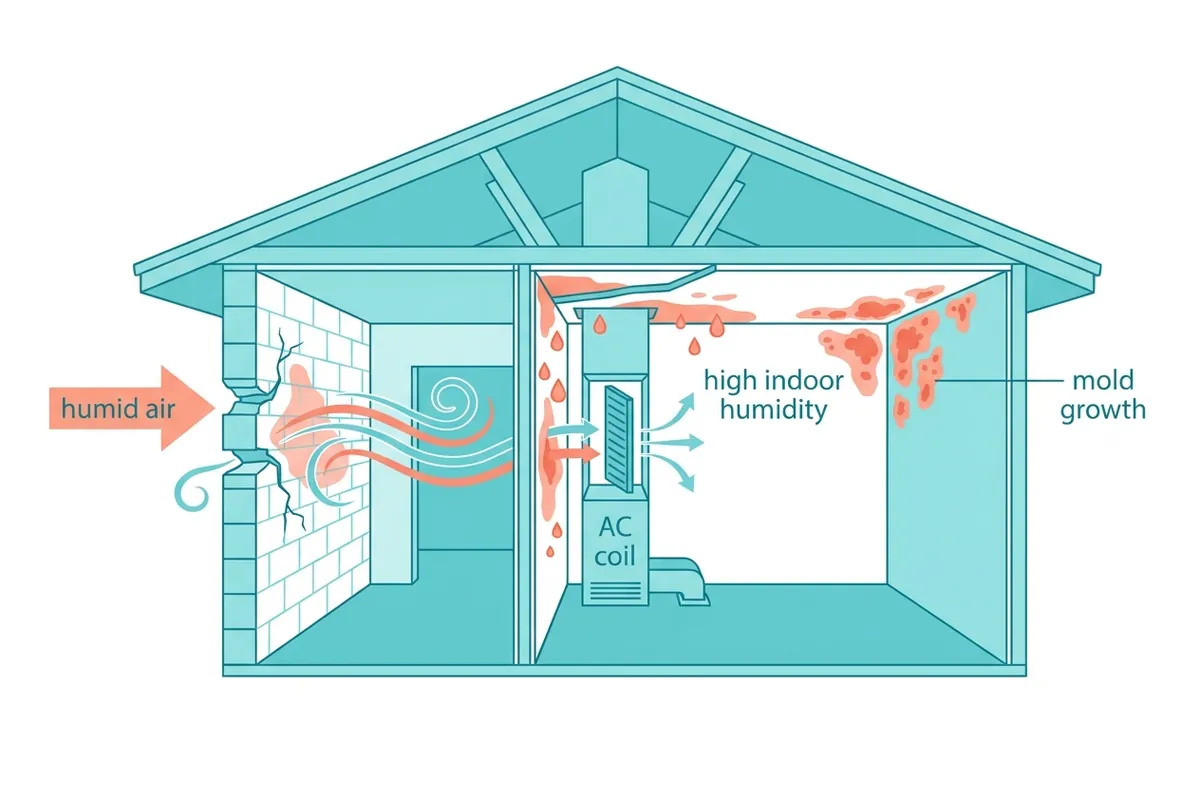
Most mold coverage assumes a pipe burst. On the Gulf Coast the more common story has no leak in it at all. Sarasota's wet season runs June through September, when daily storms and persistently high dew points keep the outdoor air loaded with moisture. Every time a door opens, a duct leaks, or the building exchanges air, that moisture comes inside.
What's supposed to remove it is your air conditioner — but dehumidification is a byproduct of cooling, and it only happens while the system runs. An oversized unit cools the house fast, satisfies the thermostat, and shuts off before it has pulled much water out of the air. The result is a house that's cold and damp: 74 degrees and 65 percent relative humidity, which is comfortable enough to ignore and plenty for mold. Below about 60 percent indoor relative humidity, mold growth is largely arrested. Above it, given time, it isn't. That single number explains more Sarasota mold than every plumbing failure combined.
The service that fixes it, and what each costs
| What you have | What's driving it | The work | Typical range |
|---|---|---|---|
| Visible growth on walls, ceilings, or trim | Sustained indoor humidity or a specific water source | Containment and HEPA remediation | $500–$6,000 |
| Musty smell, no visible source | Growth in a wall cavity, duct chase, or under flooring | Inspection and testing | $300–$900 |
| Dark sheathing, bath fan venting into the attic | Ventilation and moisture load in the attic | Attic remediation and venting fixes | $1,500–$6,000 |
| Growth at the air handler, musty air from vents | Condensation in the AC system and ductwork | AC and duct cleanup | $600–$3,500 |
| Storm intrusion, plumbing failure, wet flooring | Bulk water that has to leave before anything else | Extraction and structural drying | $1,000–$8,000 |
Most Sarasota homes need one of these plus a humidity correction — and the humidity correction is usually the cheap half.
Seasonal homes: the most preventable job we do
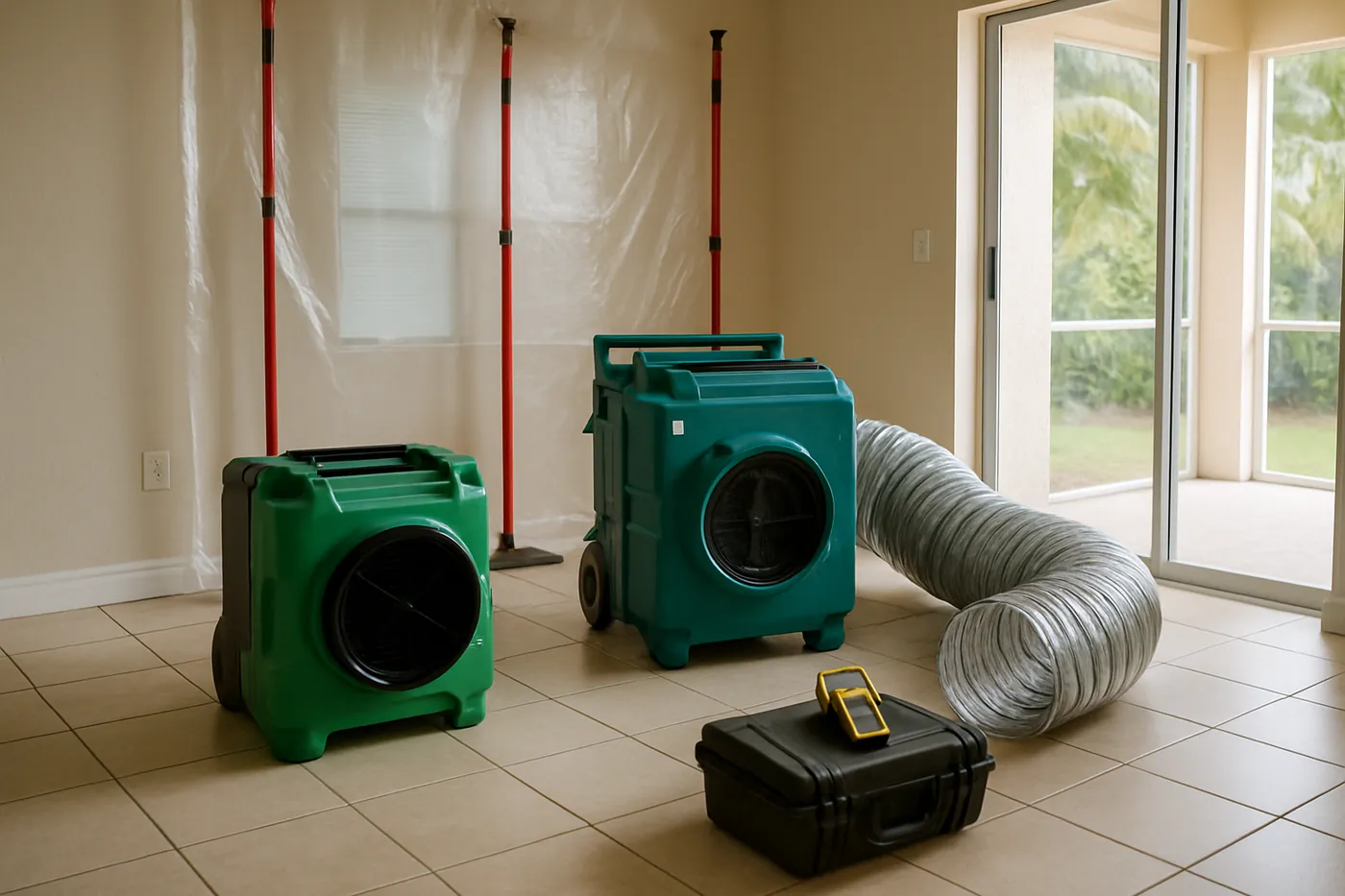
Sarasota County has a large seasonal population, and a meaningful share of the remediation work in this market traces to one decision: a house closed up for the summer with the air conditioning off or set high. The building sits sealed through the wettest, most humid four months of the year with nothing removing moisture. Owners return in the fall to a musty smell, surface growth on furniture and closet walls, and sometimes a full remediation.
The prevention costs almost nothing. Leave the system running rather than off — a common approach is holding the thermostat in the high 70s so it cycles through the season — ideally with a humidistat or a standalone dehumidifier holding indoor relative humidity under 60 percent. Add someone checking the house periodically, because a failed AC in July is only a problem if nobody notices until October. We would rather tell you this than remediate the result.
Florida licenses this work, and separates the roles
Florida is one of the states that regulates mold professionals directly: the Department of Business and Professional Regulation licenses mold assessors and mold remediators as distinct credentials, and state law restricts the same party from performing both assessment and remediation on the same project.
That rule exists for a reason worth understanding as a consumer: when the company diagnosing the problem also profits from the size of the cleanup, the incentives point the wrong way. Whoever you hire — us or anyone else — look up the license before signing. It takes two minutes on the DBPR site and it's the single best protection available in this trade.
How the inspection works
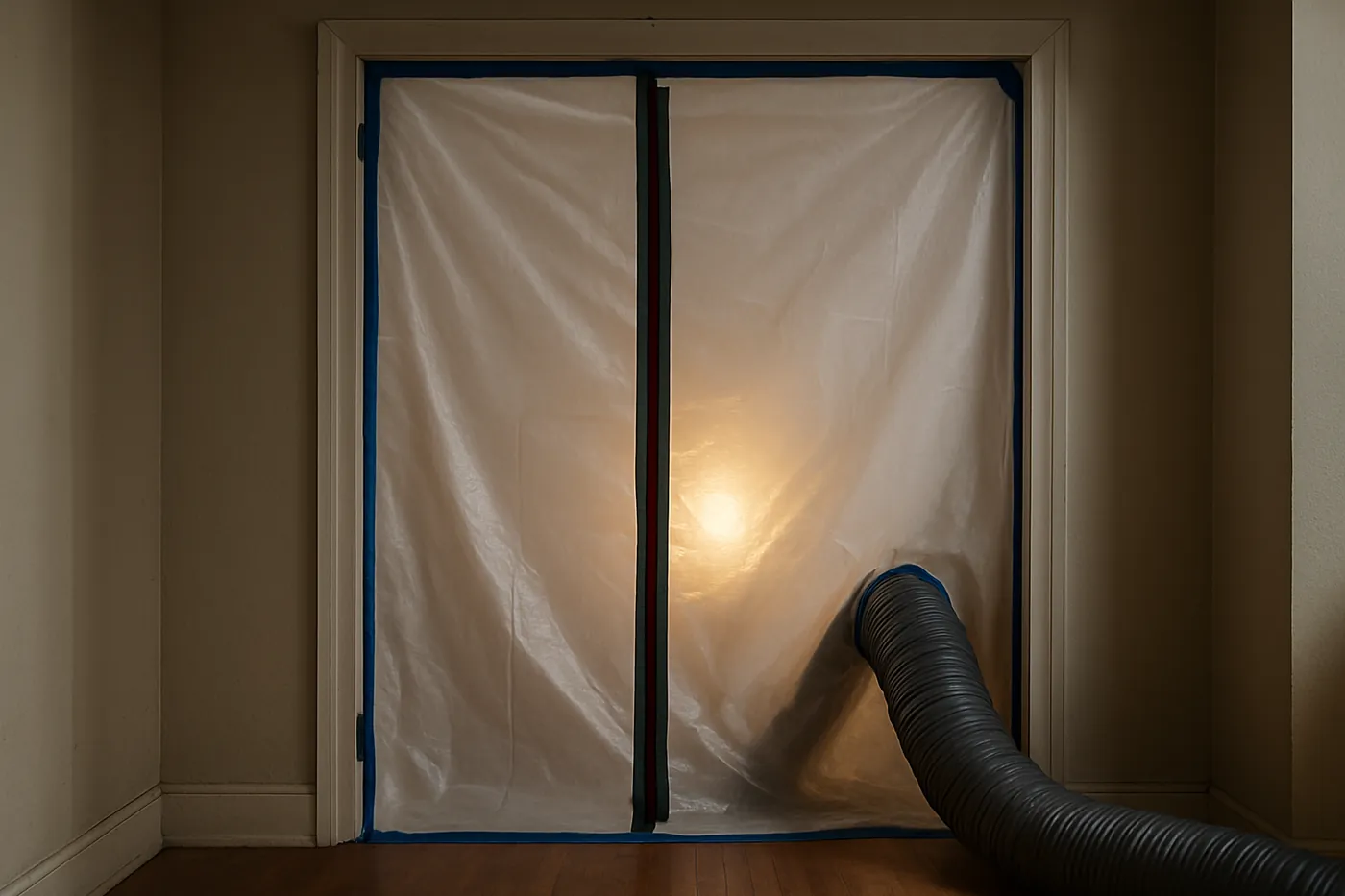
We measure rather than guess: moisture readings on suspect surfaces and wall bases, indoor temperature and relative humidity, a look at the air handler and return, attic sheathing and bath fan terminations, and a walk of the exterior for intrusion points. You get a written scope naming the moisture source, the work, the price per line, and the timeline — free, and yours to compare against any other bid.
Three questions get their own deep pages: what black mold actually is — and why closed-up seasonal homes grow it all summer — how the older raised cottages handle wet-season air under their floors, and what insurance covers, vacancy clauses included.
Mold questions Sarasota homeowners ask
How much does mold removal cost in Sarasota?
Most residential remediation runs $500 to $6,000, set almost entirely by how far it spread and whether materials have to come out. A single closet or bathroom wall is usually the low end; a whole-home job after storm intrusion is the high end. Every figure follows a free inspection with moisture readings. Our Mold removal cost breakdown for Sarasota shows what drives each figure, line by line.
Why does mold grow so readily here?
Because the outdoor air supplies the water. Sarasota gets roughly 54 inches of rain a year, most of it in a June-through-September wet season when dew points stay high day and night. Any indoor surface that isn't being actively dehumidified sits in air with plenty of moisture available, and mold needs very little to start.
Isn't my air conditioner supposed to handle humidity?
It handles it as a side effect, not as its job — and that's the gap. An AC unit removes moisture only while it's actually running, so a system that cools a house quickly and shuts off can leave humidity high. An oversized unit short-cycles, satisfies the thermostat fast, and dehumidifies poorly. Cold and damp is a real and common Florida condition.
We close our house for the summer. What should we set the thermostat to?
Leave the system running, not off. A common approach is holding the thermostat in the high 70s so the system cycles through the wet season, ideally paired with a humidistat or a standalone dehumidifier keeping indoor relative humidity under about 60 percent. A house sealed with the AC off through a Sarasota summer is the most preventable mold job we do.
Do I need testing, or can you just remove it?
If you can see it and know where the water came from, testing often adds cost without changing the plan — EPA guidance takes that position too. Testing earns its price when there's a musty smell with no visible source, when a health question is involved, or when a real estate transaction needs documentation. We tell you which situation you're in before you spend anything.
Can the same company test and remediate my mold?
In Florida, generally not on the same project. State law licenses mold assessors and mold remediators separately and restricts the same party from doing both on one job, which exists to remove the incentive to find more mold than is there. Verify any contractor's license with the Department of Business and Professional Regulation before hiring — ours included.
Is black mold more dangerous than other mold?
Color doesn't identify a species, and species doesn't change the response. Any significant indoor mold growth gets removed the same way: find the water, stop it, contain the area, remove what can't be cleaned, and HEPA-filter the air. Reputable remediators don't price by how alarming a color sounds.
Will insurance cover mold remediation?
Sometimes, and the cause decides it. Sudden accidental water — a burst supply line, a failed water heater — is often covered, with mold coverage frequently capped at a specific dollar limit in Florida policies. Long-term humidity, seepage, and deferred maintenance are typically excluded. We document cause and timeline in the format adjusters use.
Mold removal across Sarasota and Manatee counties
Bradenton · Venice · Osprey · Nokomis · Siesta Key · Longboat Key · Lakewood Ranch · North Port · Palmetto · all service areas
Get a free Sarasota mold inspection
Tell us what you’re seeing or smelling — a musty room, staining on a wall base, discoloration in the AC closet, humidity that never drops — and we’ll schedule an inspection with moisture readings and photos. We reply the same business day.