Water damage restoration in Sarasota runs $1,000–$8,000 for most homes, depending on volume, spread, and material removal. Mold can begin establishing on wet materials within 24 to 48 hours — and Gulf Coast heat and humidity push that toward the short end, which is why same-day extraction matters.
Here's what proper drying involves, and why the hidden moisture is what decides the outcome.
The window is short, and the climate shortens it
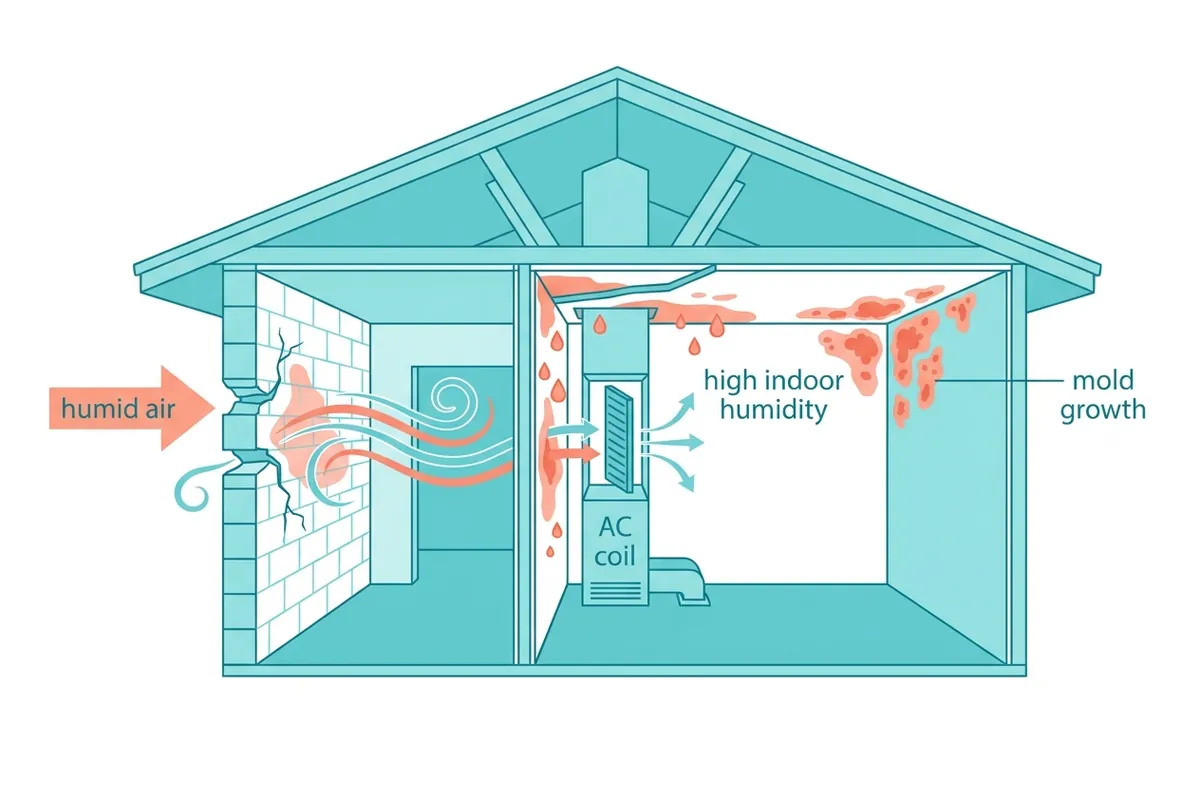
The 24-to-48-hour figure is the standard industry guideline for when mold can begin establishing on wet material. It assumes ordinary conditions. Sarasota in the wet season is not ordinary conditions: high ambient temperature and high humidity mean the air itself is offering very little drying capacity, so wet material stays wet longer than it would almost anywhere else.
That's the practical reason to call the same day rather than the next one. Water extracted and dried inside the window is a restoration job. Water that sat through a humid weekend is frequently a remediation job, at several times the price, with material removal attached.
What restoration actually involves
- Extraction — standing water out first, with equipment sized to the volume
- Material assessment — what can be dried in place and what has to be removed, decided by meter readings
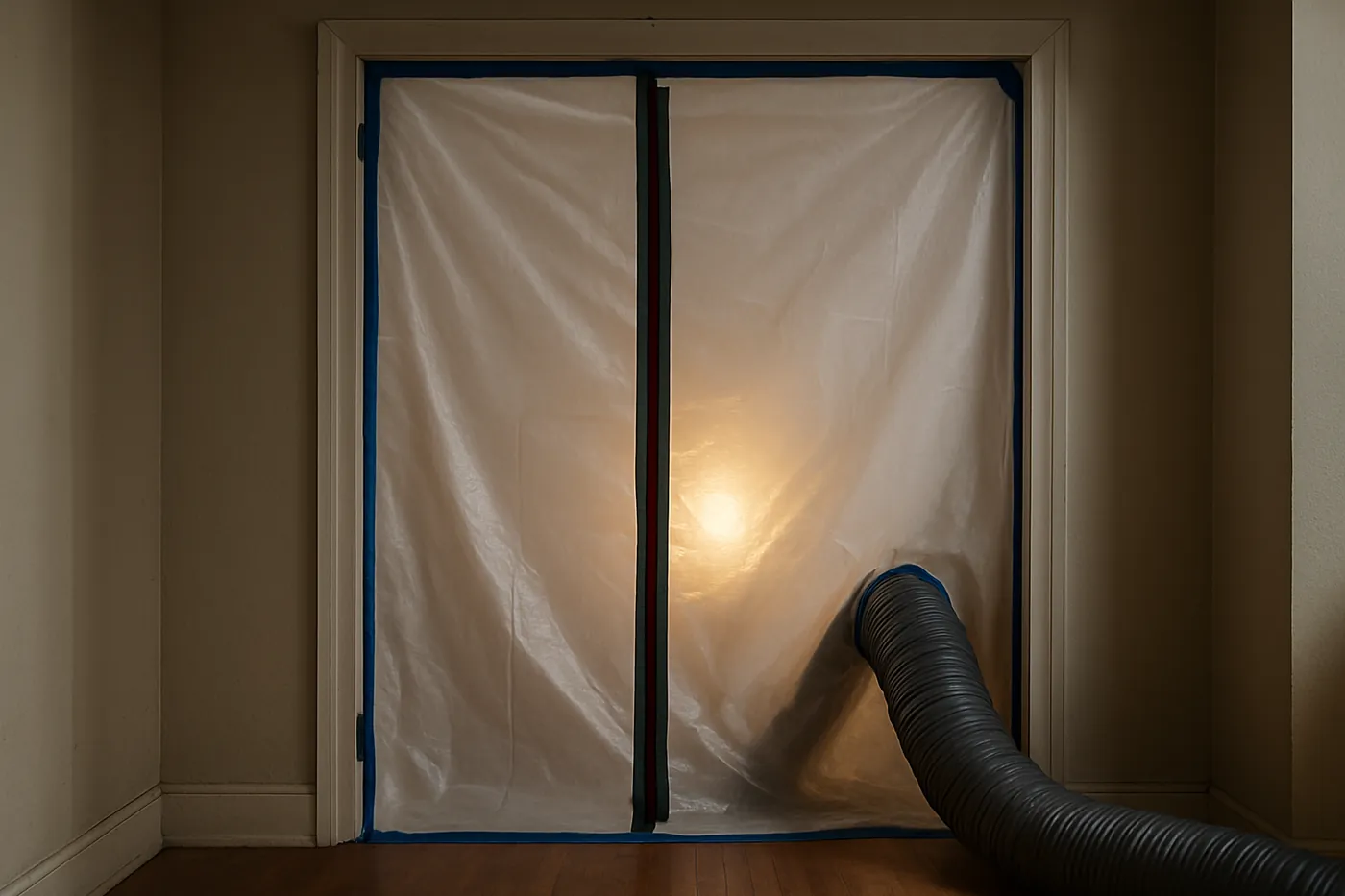
- Structural drying — air movers plus commercial dehumidifiers, positioned for the specific layout rather than scattered
- Cavity drying — wall cavities, under-cabinet voids, and beneath flooring, which is where household equipment can't reach
- Daily monitoring — readings logged against a dry standard taken from unaffected material in the same house
- Documentation — photographs, readings, and cause, in the format an adjuster expects
Surfaces dry first and lie about it
This is the failure that turns a manageable event into a mold job. Drywall feels dry to the touch while the cavity behind it is still saturated. Tile reads dry while the subfloor underneath holds water. Baseboards look fine while the bottom plate is wet. A homeowner with fans and a shop vac gets the surfaces — and the cavity, which is exactly where mold starts, keeps its moisture.
Meters are the whole answer. We read the cavity, not the wall face, and we keep reading it daily until the numbers reach the dry standard. Then the equipment comes out and you get the log.
Storm water is a different job
Water category matters as much as volume. A clean supply-line break is one thing. Storm intrusion and ground water carry contaminants, which changes what can be salvaged: porous materials that absorbed contaminated water generally come out rather than get dried in place, and the cleanup protocol is more involved.
On this coast that distinction comes up every season, and it's worth knowing before you're comparing bids under pressure. A restoration quote that doesn't state the water category isn't telling you what you're buying.
What has to happen in the first 48 hours?
Sarasota's wet season delivers water daily, and its seasonal-resident pattern means some of that water lands in houses where nobody is home to notice for months.
| Situation | What it means | How it goes in this market |
|---|---|---|
| Stop and extract | The source closed and standing water out the same day | For occupied homes, same-day extraction; for seasonal ones, the finding is often late |
| Dry to a standard | Monitored drying against readings from unaffected material | Wet-season air cannot dry a house — sealed, conditioned, monitored drying can |
| Remove what stayed wet | Saturated porous materials out before they colonise | Block-on-slab construction puts the losses in furring, base plates and cabinetry |
| Verify before rebuild | Moisture readings decide closure — never the calendar | A vacant home's closure readings deserve extra scepticism — nobody smelled it early |
For seasonal residents the honest advice is prevention: humidity monitoring that phones home costs less than the smallest remediation on this page.
Water damage questions, straight answers
How fast do I need to act after water intrusion?
Fast. The widely used guideline is that mold can begin establishing on wet materials within 24 to 48 hours, and Gulf Coast heat and humidity sit at the aggressive end of that window. Extraction and drying started the same day is the difference between a drying bill and a remediation bill.
What does water damage restoration cost?
Most residential jobs run $1,000 to $8,000, driven by how much water, how far it spread, and whether materials must be removed. Clean water caught quickly is the low end. Storm water or sewage, or water that sat for days, moves up quickly because more material has to come out.
Can't I just run fans and a shop vac?
For a small clean-water spill caught immediately, sometimes yes. What household equipment can't do is dry inside a wall cavity or under flooring, and that's where the mold problem starts. Surfaces that feel dry while the cavity behind them is still wet is the most common reason a DIY dry-out becomes remediation a month later.
Does insurance cover this?
Sudden accidental water is often covered — a burst supply line, a failed water heater, an overflow. Long-term seepage and maintenance issues generally are not, and flood water is a separate policy entirely. Florida policies also frequently cap mold coverage at a specific dollar amount. We document cause, timeline, and readings in the format adjusters use.
How do you know when it's actually dry?
Meters, not calendars. We take moisture readings on affected materials at the start and track them daily against a dry standard measured from unaffected material in the same house. Equipment comes out when the readings say so, and you get the log. A crew that pulls fans on a schedule is guessing.
Get a free Sarasota mold inspection
Tell us what you’re seeing or smelling — a musty room, staining on a wall base, discoloration in the AC closet, humidity that never drops — and we’ll schedule an inspection with moisture readings and photos. We reply the same business day.